


Developed by University of Michigan researchers and modeled after the Food Security Index, the Transportation Security Index (TSI) is a validated measure of transportation insecurity – the experience of being unable to regularly move from place to place in a safe or timely manner because of a lack of resources needed for transportation.

TSI-16
Composed of 16 questions, the TSI-16 identifies five categories of transportation insecurity.
TSI-6
Composed of 6 questions, the TSI-6 identifies three categories of transportation insecurity.
TSI-3
Composed of 3 questions, the TSI-3 identifies two two categories of transportation insecurity.
TSI in Action
If you are using the TSI in your own work, please let us know. We would like to keep track of where the index has been administered, how it is being used, and what people are learning.
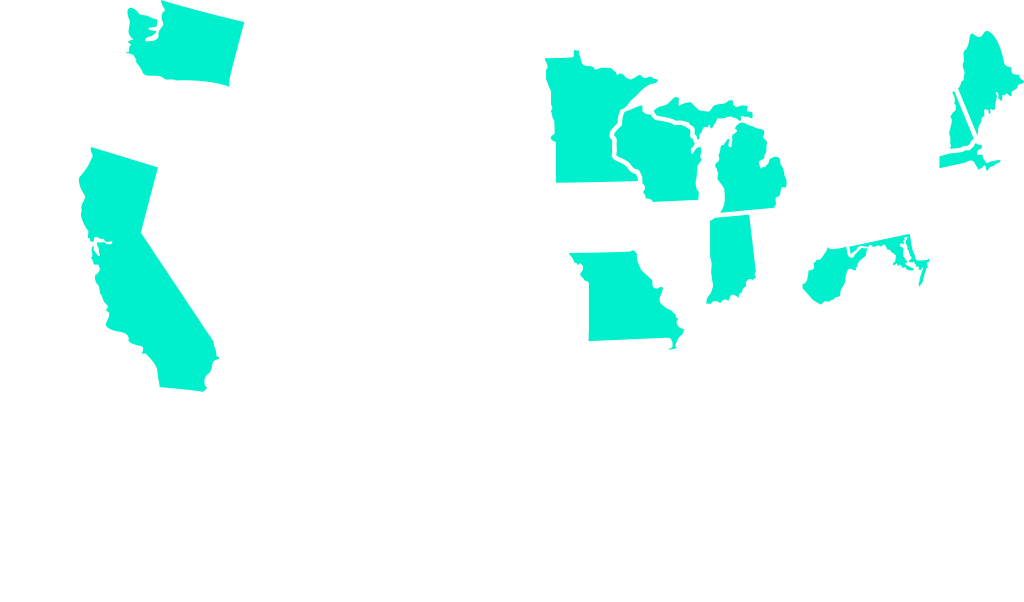
As of June 2025, the TSI has been used in cities, counties, and states across the U.S.
What is the TSI?
The TSI is a tool that measures a person’s experience with transportation insecurity. Modeled after the Food Security Index, it poses a series of questions that ask how often, in the past 30 days, a person has experienced several unique symptoms of transportation insecurity as observed in qualitative research, such as arriving late to destinations, skipping trips, worrying about inconveniencing ride-givers, or feeling left out.
With its focus on symptoms, the index spares users from attempting to catalog every possible input—from bus schedules to gas prices—that influences transportation insecurity. It also spares users from accounting for every possible place a person might go to meet their daily needs, from work to the doctor to the grocery store. This design enables people to use the index as an independent and dependent variable to consider both the causes and consequences of transportation insecurity.
The TSI is informed by qualitative research into the lived experiences of people grappling with transportation insecurity in urban, suburban, and rural contexts. It has been validated using nationally representative surveys. The index can be used to assign individuals a continuous score representing their level of transportation insecurity. It can also be used to categorize individuals by how they experience transportation insecurity, from not at all to up to one of four unique levels that differ in severity, depending on which version of the TSI is used.
TSI categories:
IIIII No Insecurity/Secure: People who can regularly get from place to place in a safe or timely manner.
IIIII Marginal Insecurity: People who are inconvenienced by transportation and experience transportation-related worry, but can regularly access essential destinations.
IIIII Low Insecurity: People who experience constrained travel that impacts daily life.
IIIII Moderate Insecurity: People who experience even greater constrained travel and affirm questions that measure negative feelings about their transportation situation.
IIIII High Insecurity: People who experience extremely constrained travel behavior with some reporting not being able to go places at all or being severely limited in the places they can go.
What makes the TSI unique?
- It is an individual-level measure, enabling users to, for example, readily differentiate between neighbors who are transportation secure and those who are not.
- It is mode-agnostic, allowing users to both understand how mobility—rather than mode of travel—impacts people broadly and identify novel solutions to the problem. Moreover, since it is mode-agnostic it can easily be deployed as new mobility technologies evolve.
- It captures the relational symptoms of transportation insecurity – i.e. the stress and social strain that stem from problems with transportation. Such symptoms have been empirically shown to be just as important for measuring transportation insecurity as the material symptoms of insecurity, e.g. long commutes, skipping trips, or arriving to destinations late.
- It identifies people with unmet demand: those who have places they want to go but who cannot get there because they don’t have the resources to do so, whether those resources are financial, health-related, a lack of friends or family who could drive them, or something else.
Who can use the TSI?
Anyone! The index is a public tool designed for use by multiple parties, for different purposes, across different sectors—from researchers to policymakers to planners to clinicians to service providers, and more.
The index is easy to administer and can be used in surveys to understand broad patterns and to deepen our understanding of transportation insecurity itself. Healthcare clinicians or social service providers can use the TSI as a screening tool to determine which clients and patients are experiencing transportation insecurity. It can also be used to evaluate whether a transportation intervention, like providing free bus passes, effectively moves people from transportation insecurity to transportation security.
Example Use Cases

Evaluate Interventions
Deployed before and after the implementation of an intervention, the TSI can be used to evaluate whether such interventions are moving people from “transportation insecurity” to “transportation security” or, conversely, whether they are exacerbating existing disparities. Interventions can include those specific to transportation – like mobility wallets – as well as those not focused on transportation, like the child tax credit or universal basic income programs. Such evaluations can help determine which interventions perform best across different geographies and populations and help planners and policymakers understand which interventions yield the most return on investment.

Document the prevalence of transportation insecurity and track it over time
Conduct recurring surveys that include the TSI at the city, state, or national level to see how the prevalence of transportation insecurity, including who is experiencing it and where, geographically, it is being experienced, changes over time. Such data collection efforts can provide insights on how transportation insecurity rates are impacted by things like changes in the cost of gas, insurance, or car ownership, additions or cuts to public transit service, shifts in the geography of poverty, and the deployment of new transportation technologies (e.g. autonomous vehicles)

Identify geographic “hotspots”
Find where people experiencing transportation insecurity spatially cluster to decide how (and where) to allocate resources, including mobility investments (e.g. new transit routes and stops, transit vouchers) and social services.

Screen patients and clients to determine social risk or eligibility
Identify whether patients or clients are experiencing transportation insecurity and in need of transportation-related assistance. The TSI can also be used to screen people for eligibility into programs and interventions that aim to include people experiencing transportation insecurity.
FAQ
How do I measure transportation insecurity using the TSI?
The TSI was designed to identify individuals experiencing transportation insecurity. It is only able to do so when (1) all the questions in the index are administered, (2) each of the questions are individually scored, and (3) the scores of each of the individual questions are added together, thus producing the respondent’s individual sum score (see “How do I score the TSI?” for instructions on scoring).
To better understand how the TSI works as an index, let’s use an analogy: diagnosing the flu. If you go to the doctor they usually ask you what symptoms you are experiencing: Do you have a fever? Do you have a runny nose? Are you coughing? Do you have the chills? Do your muscles ache? On their own, none of these symptoms help the doctor diagnose if you have the flu versus something else, like the common cold. Considered together, however, the doctor is better able to make this assessment.
The TSI works similarly. Only when all the questions in the index are analyzed together, can the index be used to “diagnose” if someone is experiencing transportation insecurity.
Which version of the TSI should I use?
Each version of the TSI performs similarly well in terms of their ability to identify respondents experiencing transportation insecurity and the prevalence estimates they generate. The biggest differences between the versions is how many categories of transportation insecurity they can identify and their time to completion.
TSI-16
Five categories identified:
IIIII No Insecurity/Secure
IIIII Marginal Insecurity
IIIII Low Insecurity
IIIII Moderate Insecurity
IIIII High Insecurity
Median time for subjects to complete:
Approximately 2 minutes
TSI-6
Three categories identified:
IIIII No Insecurity/Secure
IIIII Marginal/Low Insecurity
IIIII Moderate/High Insecurity
Median time for subjects to complete:
Approximately 1 minute
TSI-3
Two categories identified:
IIIII No Insecurity/Secure
IIIII Insecure
Median time for subjects to complete:
Approximately 30 seconds
For those who simply want to distinguish between people who are transportation secure vs. those experiencing insecurity, the TSI-3 offers the ability to do so in an efficient, cost effective way.
There are times, however, where being able to distinguish between different categories of insecurity are useful and worth the tradeoffs of using a version of the TSI that takes longer to complete. For example, when used to evaluate an intervention, it can be useful to know if the intervention is moving people from high insecurity to low insecurity. Even if the overall percentage of people are still insecure after intervention implementation, alleviating the severity of insecurity might be deemed a success and have other positive impacts, something difficult to see with just two categories. Similarly, in research, users may want to know how people with different levels of insecurity differ from one another or may want to better understand what is driving these different levels of insecurity. Such information can help people identify the different kinds of solutions that will alleviate these different kinds of transportation insecurity.
Notably, all versions can be used as a continuous variable.
How do I score the TSI?
To score the TSI, look at the responses to each of the individual questions in the TSI. Assign each “never” response a score of 0, each “sometimes” response a score of 1, and each “often” response a score of 2.
To identify a respondent’s transportation insecurity score, sum the scores of each of the individual question responses. To see how to use this score to assign a respondent to a transportation insecurity category, please download the instructions for the version of the TSI you are interested in using.
What are the material vs relational symptoms of transportation insecurity and can I measure one set of symptoms and not the other?
Questions in the TSI reflect the material and relational symptoms of transportation insecurity as observed in qualitative research. The material symptoms reflect the difficulties people have getting from place to place in a safe or timely manner (e.g., arriving places late, skipping trips, rescheduling appointments). The relational symptoms reflect the emotional toll and social strain of experiencing transportation insecurity (e.g., being embarrassed, feeling left out, worrying about inconveniencing ride givers). If your goal is to measure transportation insecurity, all questions in the index must be used (see “How do I measure transportation insecurity using the TSI?” for more information).
While many people are familiar with the material symptoms of transportation insecurity, our team wishes to emphasize the importance of the relational questions in the index. Our qualitative research uncovered that the relational symptoms of transportation insecurity were a key way transportation insecurity manifested in the everyday lives of people and could be just as troubling for people as the material symptoms. Our quantitative analysis has confirmed this. Transportation insecurity is a unidimensional condition experienced both materially and relationally. To measure transportation insecurity thus requires measuring both types of symptoms.
Can I use a subset of the questions of my own choosing to identify transportation insecurity?
Unfortunately, no. The Transportation Security Index was developed using complex, rigorous statistical methods to determine how questions are being endorsed and how they relate to one another in ways that constitute an index that measures the latent construct of interest (i.e. transportation insecurity). Accordingly, while you may use a subset of questions that comprise the index in your own work, it is important to recognize that no subset of questions that are different from those validated in the three versions of the TSI will identify transportation insecurity itself (for more, see “How do I measure transportation insecurity using the TSI?”). Nor will a subset of questions that are different from those validated in the three versions of the TSI identify transportation insecurity itself.
Can I change the wording of the TSI questions and/or the ordering of the questions?
We strongly advise against this. In terms of changing item wording, the construction of each item was informed by extensive qualitative research and refined using cognitive interviews. Through such interviews, we know that respondents understand the questions as they are phrased and that their responses are capturing the kind of data that is intended. Altering question wording could compromise respondent burden, comprehension, and judgement. Furthermore, the questions as they exist are those that have been validated; altering their wording may change the results in ways that impact the TSI’s ability to measure transportation insecurity. The same is true of changing the ordering of questions. The ordering as they are presented is the ordering that has been validated. Changing the ordering (or adding additional questions in between those items that comprise the index) may change the results in ways that compromise the quality of the data and the ability to make comparisons across findings.
Can I analyze each of the questions in the TSI separately?
Certainly! While measuring transportation insecurity requires users to analyze all of the questions in the index together (see “How do I measure transportation insecurity using the TSI?”), users can also analyze responses to each of the individual questions in the TSI to better understand how people are experiencing each of the symptoms of insecurity. Doing so will not tell you if the respondent is transportation insecure but it will provide you with a descriptive portrait of how your respondents are experiencing each of the symptoms of transportation insecurity. For an example of how the TSI has been used as an index to generate information about transportation insecurity and how each of the questions have been analyzed to create the descriptive portrait, see “Transportation Insecurity in the Motor City.”
Does the TSI come in different languages aside from English and can it be used outside of the United States?
At the current moment, the TSI has only been validated in English. However, there are researchers who have done their own translations of the TSI in different languages. Some of these researchers are working to validate these translated versions of the TSI. If you would like to know more or would like to work with our team to translate the TSI, please let us know.
The TSI was developed and validated in the United States. Because it measures transportation insecurity through questions that tap into “symptoms” of this condition, it is possible that the symptoms observed in the U.S. may not be found elsewhere. For instance, in certain cultures and contexts people may not worry about inconveniencing ride givers because car pooling or ride giving may be more of a cultural norm than in the U.S. We can not know how the TSI will translate to non-U.S. contexts without testing and validation in these contexts. That being said, it is being deployed outside of the United States: in Australia. If you would like to work with our team to do testing and validation outside of the U.S., please let us know.
Where can I get help using the TSI or analyzing TSI data?
Contact us! We are here to help.
Attributions
The TSI is available for use under the CC-BY-NC-ND license. Please include the following attribution on all publications that includes the TSI or data and analyses derived from its use:
“Copyright (c) 2018 The Regents of the University of Michigan,” the citations below, and a link to the CC-BY-NC-ND license on all copies of the TSI. Any noncommercial use of unmodified TSI is permitted.
If you are interested in commercial use or in building upon or modifying the TSI, please contact transportation-insecurity@umich.edu.
Citations
Gould-Werth, Alix, Jamie Griffin, and Alexandra K. Murphy. 2018. “Defining a New Measure of Transportation Insecurity: An Exploratory Factor Analysis.” Survey Practice, 11:2, pp. 1-36.
Murphy, Alexandra K, Alix Gould-Werth, and Jamie Griffin. 2021. “Validating the Sixteen Item Transportation Security Index in a Nationally Representative Sample: A Confirmatory Factor Analysis” Survey Practice.
MacDonald-Lopez, Karina, Alexandra K. Murphy, Jamie Griffin, Michael Bader, Alix Gould-Werth, and Nicole Kovski. 2023. “A Driver in Health Outcomes: Developing Discrete Categories of Transportation Insecurity.” American Journal of Epidemiology.
Murphy, Alexandra K., Alix Gould-Werth, & Jamie Griffin. 2024. “Using a Split-Ballot Design to Validate an Abbreviated Categorical Measurement Scale: An Illustration Using the Transportation Security Index.” Survey Practice, 1-17.
Sponsors

The National Science Foundation; Stanford University’s Center on Poverty and Inequality; Mcity; Michigan Department of Transportation; University of Michigan’s Poverty Solutions; U-M’s College of Literature, Arts, and Science; U-M’s Office of Research; U-M’s Department of Sociology; U-M’s Center for Public Policies in Diverse Societies; U-M’s Population Studies Center.

A measure such as the (Transportation Security Index) is essential for expanding the usual focus on physical performance of infrastructure to understand whether transportation is meeting people’s needs.
NATIONAL ACADEMIES OF SCIENCE, ENGINEERING, AND MEDICINE
The National Academies’ report, An Assessment of Data, Tools, and Metrics for Equity in Decisions About Surface Transportation Investments, January 2025, included a recommendation that communities be provided resources to pilot test tools to measure transportation insecurity.